The Future Recorder, Pt. 1
Note to the Reader
Time doesn't always move like a straight line. Sometimes it moves like a shadow, skipping, looping, and changing shape depending on where you stand.
This story is told the same way. Some moments may feel too clean, too strange, or slightly out of place. That is not an error. It is a signal.
If something feels impossible, don't rush to solve it. Hold onto the feeling, follow the thread, and keep going. The answers aren't missing; only hidden in the order you receive them.
This book is a work of fiction built around a real question: if physics sometimes talks about time as a dimension, does that mean the future already exists, and if so, could we record it in the present?
The story uses a single recurring project, the "Future Packet", to explore what modern physics does and does not allow. Real concepts appear (relativity, light cones, quantum no-signaling, wormholes, chronology protection), but characters and events are invented.
Chapter 1: The Clock Trick
Day 1
December in Germany had a way of making mornings feel unfinished.
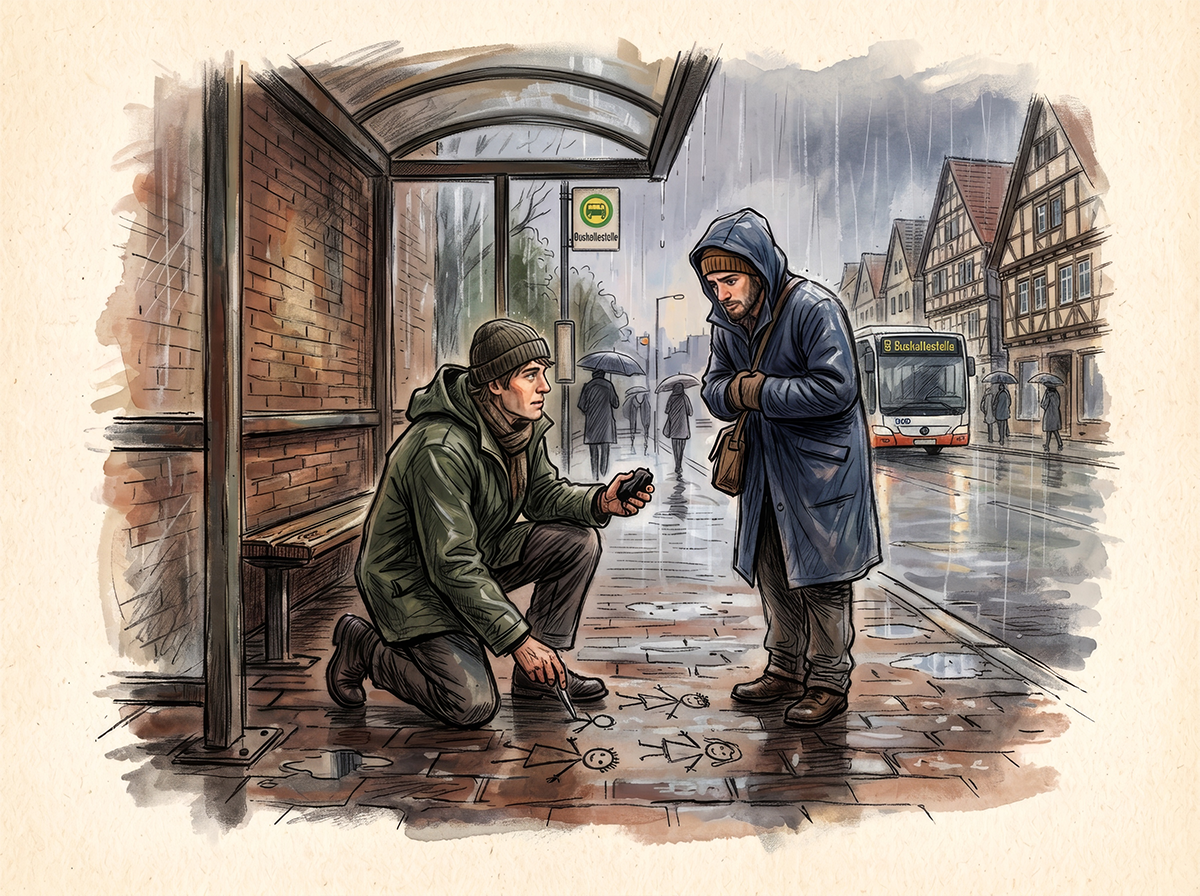
By seven, the sky over Ravensburg was still pale and half-awake, as if daylight had arrived out of duty rather than desire. The cold had settled into everything; the metal benches at the bus station, the glass walls of the shelter, the wet pavement, the fingers of people holding paper cups on their way to work. Streetlights were still on. Their yellow reflections stretched across the ground like tired lines of gold.
Jay stood near platform three with both hands buried in his coat pockets, shoulders slightly bent against the wind. He had slept a little over four hours. Not enough to call it rest. Just enough to make the body obey.
His internship started in less than an hour.
His mini-job at the restaurant would end the day much later.
Between those two shifts, there would be task updates, unread messages, quick meals, forced focus, and the private effort of pretending he was managing everything better than he really was.
This had become his routine in Germany. Software engineer by daylight, restaurant worker by night, tired human in the hours in between.
A bus pulled in with a low hiss. The doors folded open and a wave of schoolchildren climbed inside with flushed cheeks, wool caps, and backpacks that looked heavier than they were. On another platform, office workers stood in dark coats with takeaway coffee, checking the time with the kind of seriousness Jay had begun to associate with Europe. Farther down, a few teenagers walked past laughing too loudly for the weather, probably heading to college, moving with the loose confidence of people who still believed time belonged to them.
Jay watched them the way he watched most things here: with curiosity first, then comparison.
Back home, mornings had noise built into them. Traffic that argued with itself. Horns that behaved like language. Tea stalls already alive before sunrise. Streets that woke up fast and without…